We have long been like this (prohibition)
It may seem like what we are experiencing is unprecedented, but it isn't. The temperance movement culminating in Prohibition is remarkably analogous to what we are experiencing today.

Not in the way you think. Allow me to explain.
Over the long weekend, I did two things. One was doing some drudgery preparation work for quarterly planning at work (that too way too many hours), and the other was binging Ken Burns' "Prohibition".
Over three episodes near an hour and forty-five minutes each, Ken lays out the genesis of the concept, the actions that led to the 18th Amendment, and how that changed the nation.
In this, I saw some powerful parallels to what we are experiencing today (and the trajectory of the Religious Right from the 60's and 70's until now) that hit me hard.
In a nutshell, the story is in three parts:
- The lead up, what drove the rise of the temperance movement, and what accelerated it in the late 19th century
- The activism that shifted public opinion (and the underlying demographic shift that caused the panicked rush)
- How it unfolded, how it fractured American culture and society
In all three of these phases, there are echoes to today.
The long game - driving from middle America
At the beginning of the 19th century, America was predominantly an agrarian society. It was mostly rural, with the population spread like peanut butter on toast. This even distribution made sense back when the Electoral College was a way to "balance" the country (and to protect the slave states where their population was artificially low due to their "chattel" being only 3/5 of a "human".
Still, in pre-industrial America, with most of the commerce being generated by agriculture, this wasn't awful.
But, because agriculture produced more grain and other products than were needed to feed America, there was the need to do something with the excesses without letting it spoil. And one way that humans in society have used for this throughout human history to fement the grains (and fruits). That's why we have beer, wine, mead, and cider.
And America being a nation of immigrants, the population was well versed in turning water (and grapes) into wine. And then distilling that into spirits.
To make a long story short, humans + alcohol = abuse, addiction, and societal troubles.
It existed in the 1800s, and it exists today. But like all things Americans, we do it to the extreme.
And yes, there was a lot of abuse, a lot of domestic violence, and/or domestic abandonment.
And being a rural society, that was predominantly Protestant, the growing outrage was led from religious groups. And thus rose up the WCTU or Women's Christian Temperance Union.
It really grew in strength and influence in the latter quarter of the 19th century, and became very organized in their work. And they focused their attention on a generation of children, inculcating them into the "alcohol is the devil". This was an important factor, because when the acceleration of the movment in the early decades of the 20th century picked up, these "children" were adults, and fully indoctrinated into movment, at just the time to shift political opinions.
The one thing that I took from this segment is that you don't take women lightly, they have historically kicked ass and been able to accomplish amazing things (whether good or bad is irrelevant at this juncture). Not that I needed to be convinced of this.
Keep in mind that throughout the 19th century, the industrial revolution was accelerating. This was beginning to shift population from rural/agrarian areas to cities and factories. The migration of population to urban centers was causing the rural areas to panic that their power was abating. That it wasn't going to always be a family farming nation.
Additionally, the immigration to the United States was growing to feed the insatiable need for labor that was driving the industrial output of the nation. This will be important later...
Temperance gains a political profile
Beginning with the rise of the WCTU, the educational push, and frankly a whole lotta abuse fo alcohol came together in the last decade of the 19th century to make politicians begin to take notice (and by take notice, I mean they started realizing that a fuckton of angry women were a force that couldn't be ignored.)
Also, this dovetailed with the growing women's suffrage movement, and together this enhanced the push.
But there was another underlying trend. The largely Protestant rural portions of the country, as well as the "wild" west, were battling the east coast industrial urban rise of powers, and because of the quirk of the Electoral College, they had the power to use temperance as a strong wedge.
Furthermore, this was the era of the "Saloon" a place that was male only (except for the prostitutes as many of these saloons were bordellos as well). It was not uncommon for men to take their paycheck to the saloon, cash it, and spend it all on spirits and other activities, leaving their wives to try to feed and keep their family alive with the dregs.
The WCTU was masterful at messaging, and this was something that they effectively used to grow support, particularly with their elected politicians, even though they had not electoral power.
A tipping point was in the early 1900's when a generation of children indoctrinated in the evils of alcohol came of age, men and women, began rising into the ranks of power.
It wasn't uncontested though.
In this time, from the founding of the nation, the government was funded largely by tariffs and excise taxes. And a large fraction of these excise taxes were levied on intoxicating drink.
This allowed the major brewers to wield a lot of control over the political dialog, because they literally funded the government. They weren't always successful, but because they had vertically integrated the saloon business (to start a saloon, the brewers – Pabst, Anheuser-Busch, etc. – would pay the proprietor's license fee, pay for the building/refurbishment, the furniture, the signage, and provide exclusive pricing for the beer sold. This was the first "Beer War"[1] and it led to an explosion is outlets for people to build and operate these dens of drink.
And it should be noted that in the pre-automotive era, that one of the worst confluences, that of drunk driving, was much less of a societal concern (but not now concern it should be noted).
Undergireding this was an acceleration of the industrialization, and true waves of less desirable immigrants, that will be the topic of the next section.
The demographic apocalypse
This will sound familiar, but in the mid 'aughts, it was realized by the political class that the monumental growth of the industrial belt, states like Ohio, Pennsylvania, and the nascent rise of the automobile plants in Detroit were going to overtake the rural, agrarian states. The 1910 census was likely to be the last one where the rural states would dominate (editor's note: 100% true), the Jeffersonian view was going to be in the rear-view mirror of the industrial might of the United States. Financial power was long concentrated in NYC, but now the eastern seaboard was going to be the powerhouse of the nation.
This was fuelled by European immigrants, and not the WASP-y sorts. No, a lot of Catholics, and eastern/southern Europeans were flooding in. The Irish, the Italians, people from the slavic areas (Germany, Poland, Hungary, Slovakia) were landing every day, driving the industrialzation. And these immigrants brought a culture of alcohol consumption with them. They worked ard, for low wages, and they drank a lot of beer. Hell, communion was performed with wine for the transsubstantiation. It was literally their religion!
The Temperance folks realized that to halt this alcohol fueled society, they needed more than just local laws, they needed a constitutional amendment.
The double whammy
The force to keep the prohibitionists at bay was the funding for the Federal government. All through to this time, the bulk of government funds came from the excise taxes on alcohol.
But in 1913, the 16th Amendment was ratified, and that granted Congress the power to levy income taxes.[2] This knocked the brewers for a loop, as they no longer had a purse string attachement to the political process.
This both reduced the clout of the brewers, and allowed the rising "temperance" politicians to become ever more aggressive.
Combine this with the demographic urgency, the Temperance movement struck, and they were able to get the 18th Amendment passed and ratified.
This stunned the "wets"[3] who thought for certain that they wouldn't completely ban alcohol, but the "dry" faction won, and the Volstead Act was egregiously restrictive.
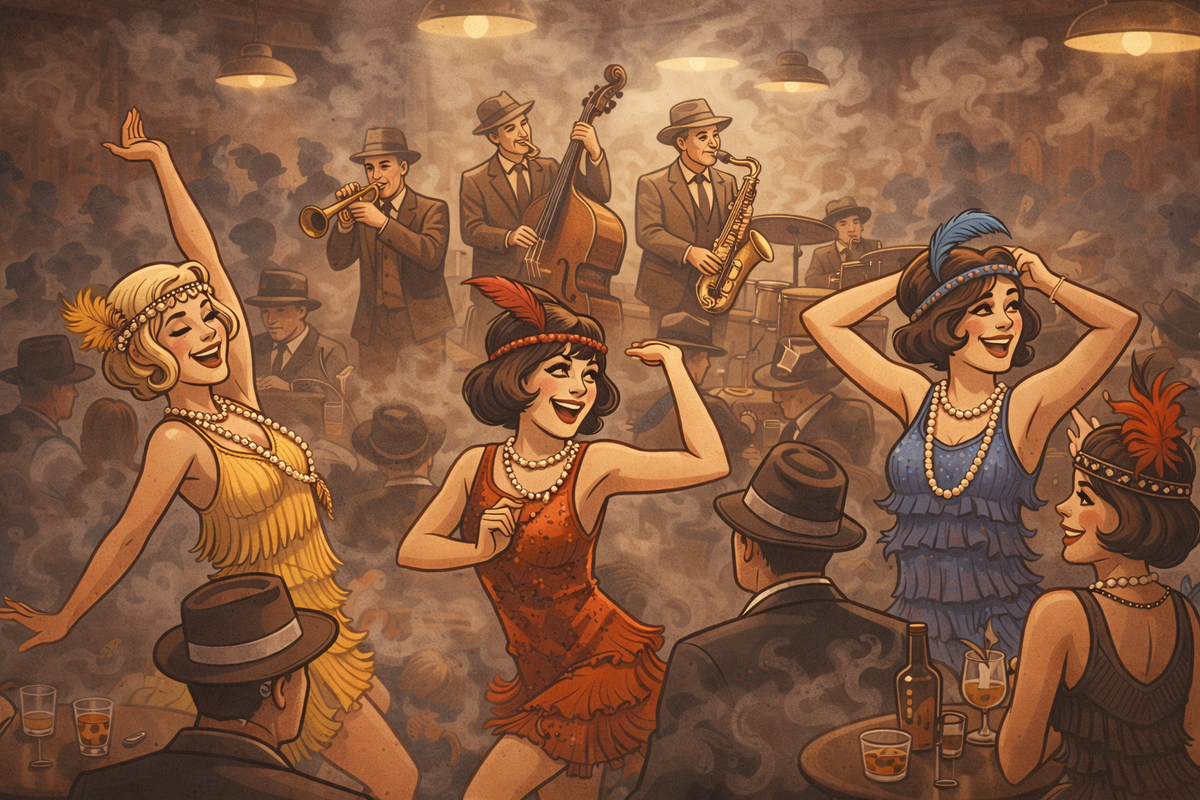
That led to a decade plus of loopholes, gave us the advent of true organized crime, an amazing amount of hypocrisy, and, ultimately made drinking fashionable to women. Before they rarely drank in public, but the advent of speak-easys had the exact opposite of what the WCTU wanted.
When the act was repealed more than a decade later, the changes to the social fabric of the country was forever changed. Instead of reverting to an 18th century sensibility (that frankly wasn't so sensible), the prudes of the WCTU and the movement they drove did more to liberalize the nation.
Lessons for today
The Protestant urge to enforce their morality continues to this day. The advent of Civil Rights led to the proliferation of "Christian Academies" thinkly veiled schools to keep their lily-white wee ones from having to mix with black children, to the rise of homophobia, the reaction to Roe v. Wade, to the FFRA, the melding with the Republican party at the start of the Reagan era (although they had been trying to wedge their way into it much earlier).
They still want to impose their parochial world on the rest of the nation. In Trump and their infiltration of groups like The Heritage Foundation, they have a receptive audience, and we as a nation are forced to live through this hell-scape, but keep heart, the arc of temperance and prohibition tell us that they will overreach, and society will at some point revert to a path of progress.
It won't happen overnight, but it will happen.
I just hope I live long enough to see it. That is a serious question at the moment ...
Please, drop your thoughts below, and if you haven't seen it, do watch the three episodes of Ken Burns' "Prohibition", it is like all of his work, outstanding.
You made it this far, why not subscribe? Always free, my only reward is the ego boost I get when I am notified of a new subscriber!
1 - as opposed to the 1970's beer war that was mostly a marketing exercise. See Ries & Trout
2 - it is also this event that really freaked the capital class out, a freak-out that continues to this day, as they try to whittle down the temerity of the government to take any of their lucre to better the welfare of the nation, but that's a different story.
3 - the pro-drinking faction were called the "wets"